
Why Friction Reduction Is the Missing Link in Metal Cutting Efficiency
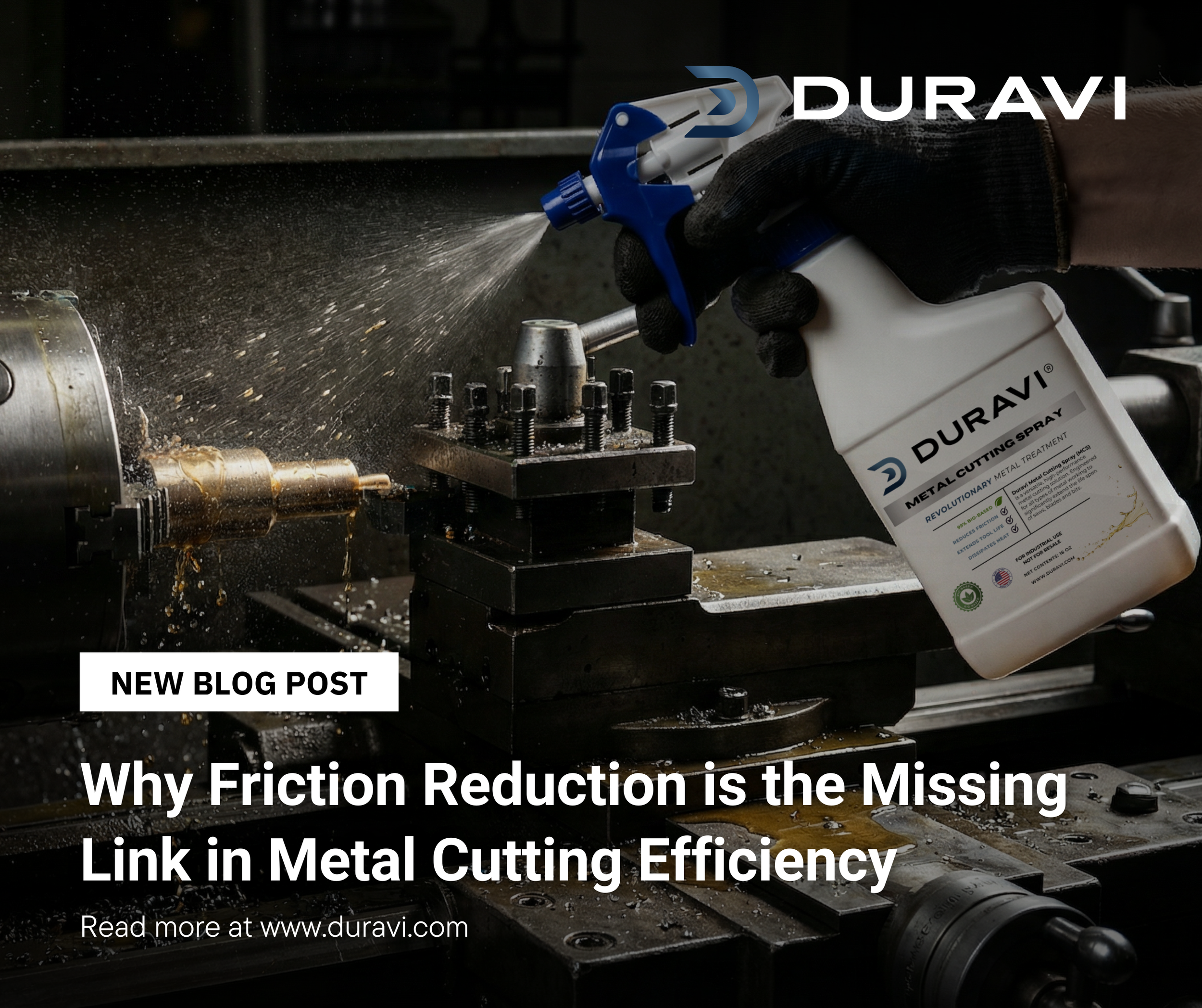
Metal cutting pushes machinery and tooling to extremes. High speeds, relentless friction, and constant thermal cycling create an environment where every micron of wear and every degree of heat matters. Whether you’re machining aluminum, cutting steel, or shaping high-strength alloys, the goal is always the same: cleaner cuts, longer tool life, and greater operational efficiency.
Duravi’s surface transformation technology is helping operators achieve precisely that — without changing equipment, lubricants, or cutting fluids.
By bonding with the metal at a molecular level, Duravi reduces friction inside the machine itself, creating smoother internal movement and enabling cutting systems to perform with greater consistency, stability, and speed.
Operational Data: What Workers Saw After Treatment
Across CNC shops, fabrication facilities, and industrial cutting environments, operators recorded clear, measurable gains after applying Duravi:
• Lower operating temperatures during cutting cycles
Duravi’s friction-reducing effect helps machines maintain cooler operating temps — especially during long, repetitive cutting passes where heat buildup normally leads to wear or tool failure.
• Extended tool life and fewer mid-job replacements
With smoother internal motion and less heat stress, cutting tools stayed sharper for longer. Operators saw a reduction in premature edge breakdown, allowing more continuous production between tool changes.
• Reduced vibration during high-speed cutting
Lower friction means smoother spindle operation. Workers reported noticeable reductions in chatter, vibration, and micro-instability — all key factors in improving cut quality and part accuracy.
• More consistent feed rates and cutting performance
Machines maintained stronger, more stable cutting force even under heavy loads, resulting in cleaner surfaces, fewer rejects, and more predictable runtime behavior.
• Improved energy efficiency
With less internal resistance, motors required less energy to maintain the same cutting performance, supporting both cost reduction and sustainability goals.
Why This Matters for Machine Shops and Manufacturers
In metal cutting, efficiency is everything — and every inefficiency compounds:
Tooling is one of the highest recurring costs in machining.
Heat accelerates wear, distortion, and inaccuracy.
Vibration leads to scrap, wasted material, and downtime.
Maintenance interruptions derail workflow and scheduling.
Duravi helps mitigate each of these pain points at the source.
By transforming the metal surface itself, it reduces the friction built into the machine’s internal components — the unseen drag that accelerates heat, wear, and instability.
The result is a stronger, more reliable cutting environment with:
longer operating windows
fewer tool changes
smoother high-speed performance
and reduced energy consumption
All without altering existing systems or workflows.
Duravi in Industrial Environments: Built for Pressure, Speed, and Precision
Metal cutting requires stability and consistency across thousands of cycles. Duravi’s plant-based formula stays effective under heavy loads, high speeds, and elevated thermal conditions, making it ideal for:
CNC machines
Fabrication shops
Milling and turning centers
Tube and plate cutting
Precision machining environments
By strengthening the internal surfaces that keep machines running smoothly, Duravi enhances tool handling, cutting accuracy, and equipment longevity.
A Smarter Standard for High-Performance Cutting
Manufacturers are under pressure to deliver faster turnaround times, tighter tolerances, and greater sustainability — all while keeping costs down. Duravi offers a proven pathway toward more efficient, reliable metal cutting operations.
With documented reductions in heat, vibration, and wear — and notable improvements in tool life and consistency — Duravi helps shops of all sizes elevate their cutting performance without major investment.
From precision machining to heavy industrial cutting, Duravi supports the quality, reliability, and efficiency modern manufacturers demand.