
There's nothing quite like hitting the open road. Whether you're heading for the mountains, the beach, or just getting away for a few days, the last thing you want is car trouble interrupting the adventure.
A little preparation goes a long way. Checking a few basics before you leave can help you avoid unexpected breakdowns, expensive repairs, and those dreaded hours waiting for roadside assistance.
The good news? You don't have to be a mechanic to get your car road-trip ready. Just give yourself a little time before departure to check the essentials and take care of anything that needs attention.
One or two weeks before the trip
Start with a quick look at your vehicle's maintenance schedule. Is an oil change coming up? Have you been ignoring a warning light or an unusual noise? Now's the time to take care of it.
Think about where you're headed, too. Mountain roads, summer heat, cold weather, heavy luggage, and towing can all put additional demands on your vehicle.
If something needs attention, don't wait until the day before you leave. Give yourself time to make any necessary repairs and take the car for a few local drives afterward.
Tires
Your tires are the only thing connecting your vehicle to the road, so give them a little attention before a long drive. Check tire pressure when the tires are cold, using the recommended PSI on the driver's doorjamb sticker, not the maximum pressure printed on the tire. Look for worn or uneven tread, visible damage, and anything stuck in the rubber. Don't forget the spare tire if your vehicle has one, and make sure you have the tools needed to change a flat.
If you're loading up with passengers, luggage, or towing a trailer, check your owner's manual for any additional tire pressure or load recommendations. A few minutes of preparation can help you avoid spending hours on the shoulder of the highway.
Most newer vehicles have tire pressure monitoring systems, but don't rely on the dashboard alone. A quick visual inspection can catch damage or uneven wear that a pressure sensor won't detect.
Fluids and filters
Your engine works hard on a long drive, especially in hot weather, heavy traffic, or hilly terrain. Before you leave, check your engine oil, coolant, windshield washer fluid, and any other fluids your owner's manual recommends checking.
If you notice a fluid level keeps dropping, don't just keep topping it off. Have the cause checked before hitting the road. And remember, never open a hot cooling system.
While you're under the hood, take a quick look at accessible belts, hoses, and filters. Cracks, leaks, obvious wear, or an extremely dirty air filter could be signs that maintenance is overdue.
Not comfortable checking these yourself? A quick pre-trip inspection at a trusted repair shop can provide some peace of mind.
Battery, brakes, and lights
A battery that struggles to start your car at home probably won't become more reliable halfway through your trip. If you've noticed slow starts, dimming lights, or corrosion around the battery terminals, consider having the battery and charging system tested before you leave.
Pay attention to how your brakes feel, too. Squealing, grinding, pulling to one side, or unusual vibrations deserve attention before a long drive.
Finally, do a quick walk-around and check your headlights, brake lights, turn signals, and hazard lights. If you're towing a trailer, check those lights as well.
These are simple checks that can make a big difference once you're on the road.
Pack the boring stuff you will be glad to have
Nobody wants to think about getting stranded, but a few basic supplies can turn a frustrating situation into a manageable one.
Keep a phone charger, portable power bank, flashlight, first-aid kit, drinking water, and weather-appropriate clothing in the vehicle. Make sure your insurance information and roadside-assistance contact details are easy to find.
A tire gauge, emergency warning triangle, and the appropriate tire repair or replacement equipment are also worth having. If you're traveling somewhere with unreliable cell service, download your maps ahead of time.
And here's one tip that's easy to overlook: don't bury your emergency supplies underneath three suitcases and a cooler. Keep them somewhere you can actually reach them.
The night before
You've done the preparation. Now it's time for a few final checks.
Make sure your tires are properly inflated, your fluids are where they should be, and your windshield and lights are clean. Check your wipers, secure your luggage, and make sure nothing blocks your view.
If you've had maintenance or repairs completed, it's best to have already taken the car on a local test drive before departure.
Then pack up, get a good night's sleep, and enjoy the trip!
At the first fuel stop
Your first stop is a great opportunity for one last quick check.
Walk around the vehicle and look at your tires. Make sure your luggage is secure and, if you're towing, check your trailer connections. Keep an eye out for unexpected leaks, strange smells, or anything that feels different from the start of your trip.
It only takes a couple of minutes, and it's a good habit to repeat during longer drives.
Then grab your snacks, stretch your legs, and get back to enjoying the road.
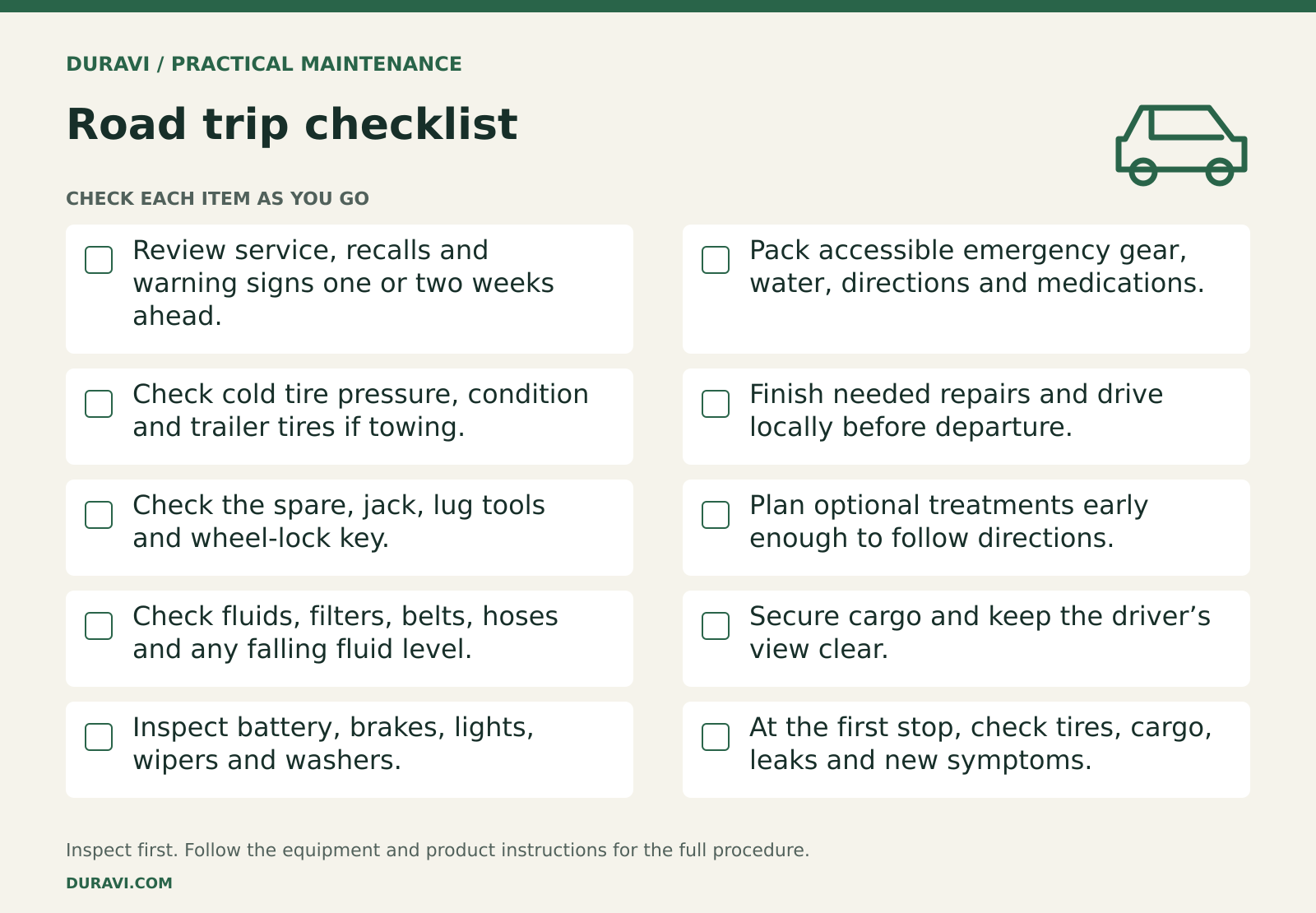
Your road trip checklist
Duravi can help you be prepared
Getting your vehicle road-trip ready is about more than checking boxes. It's about giving your engine the attention it deserves before asking it to carry you hundreds, or even thousands, of miles.
Once your routine maintenance is up to date and you're using the correct engine oil, you may want to consider additional protection for the metal surfaces inside your engine.
Duravi Engine Enhancer is designed to support those critical metal contact surfaces where friction and wear occur during normal operation. It works through your engine oil, making it an option to consider as part of your overall maintenance routine.
If you decide to use Engine Enhancer, follow the product directions and give yourself time to observe the vehicle before your trip.
Because the best road trips are the ones where you're thinking about the destination, not what's happening under the hood.