Engine Additives Explained Without the Jargon
Additives: Different Paths. Different Jobs
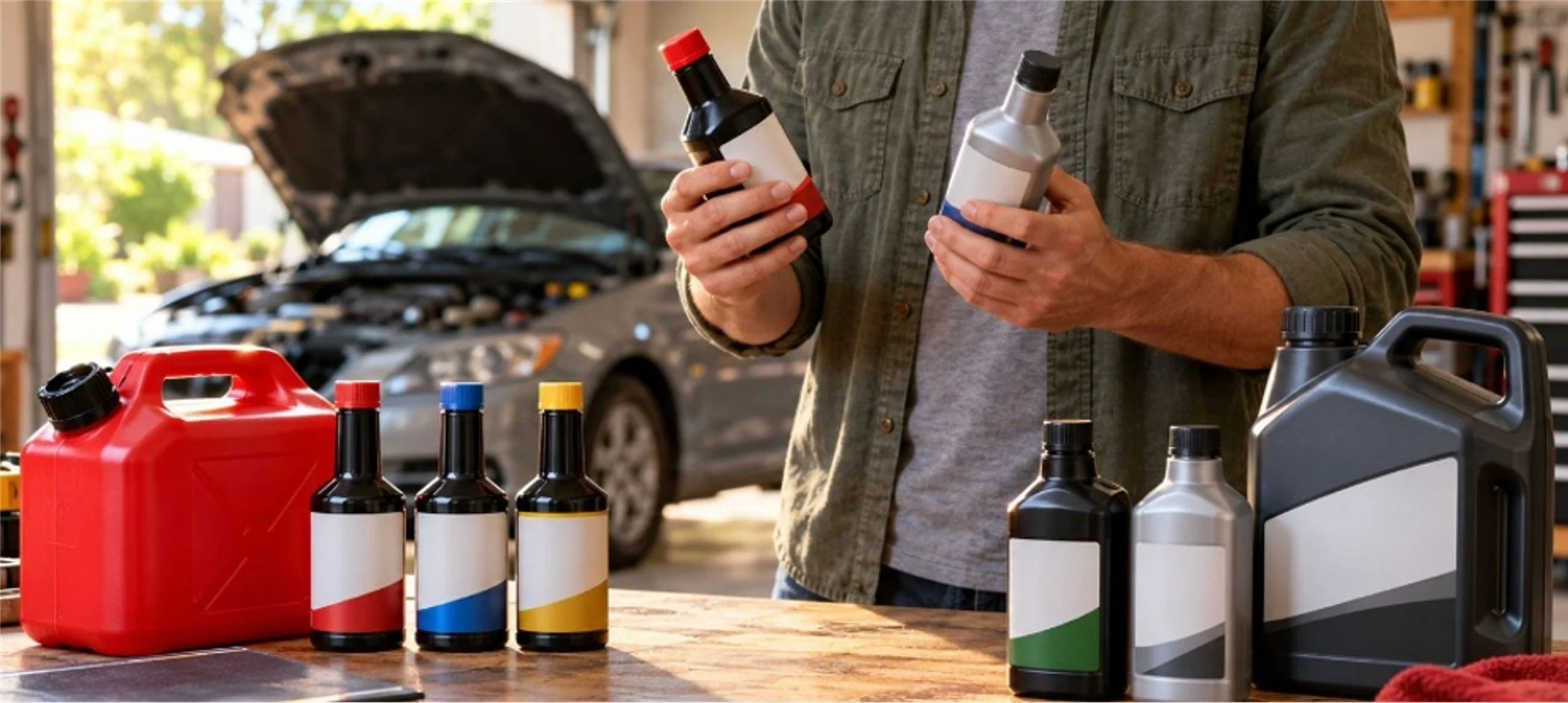
“Engine additive” is one of those labels that sounds specific but really is not. Two bottles can sit next to each other on a shelf and be meant for completely different jobs. One goes in the fuel. One goes in the oil. One is meant to clean. Another is meant to support lubricity, a fluid’s ability to reduce friction and prevent wear between moving metal surfaces.
So before asking whether an additive is “good,” ask a better question: “good for what”?
Fuel System Cleaners
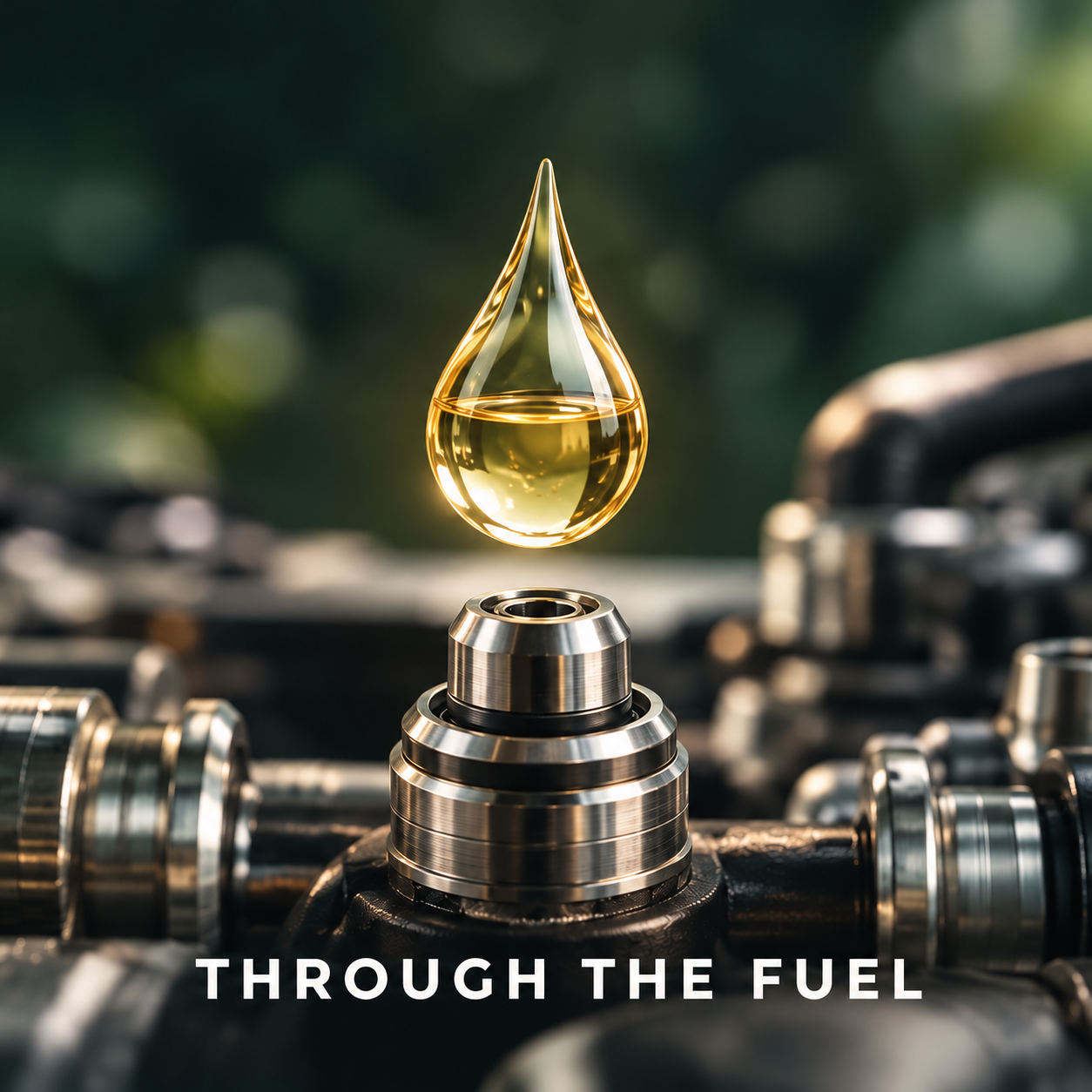
These are generally meant to deal with deposits somewhere along the fuel path. The exact target depends on the product and the engine design. A cleaner is not automatically a stabilizer, octane booster, or lubricity treatment.
And if the car has a misfire, warning light, low fuel pressure, or a confirmed bad injector, diagnosis comes first.
Fuel Stabilizers
Stabilizers are aimed at fuel that will sit. Think generators, lawn equipment, seasonal vehicles, or stored fuel. They do not give you permission to ignore the equipment maker's storage instructions or keep fuel forever.
Octane Boosters and Cetane Improvers
Octane is a gasoline conversation. Cetane is a diesel conversation. Both relate to how fuel behaves during combustion, but they are not interchangeable. Start with the fuel the engine requires. An additive is not a smart workaround if you are applying it to the wrong fuel.
Engine Oil Additives and Viscosity Products
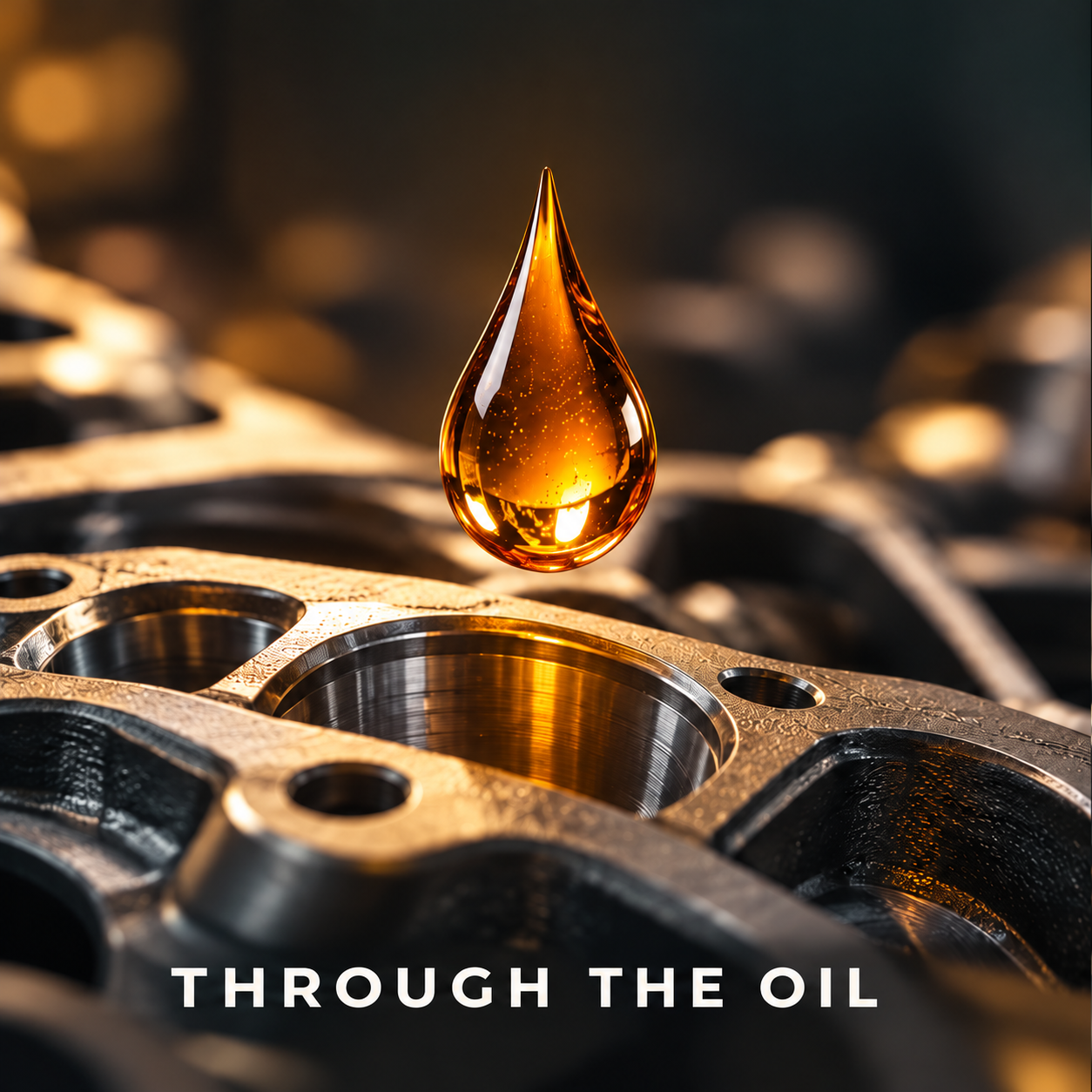
Some oil products are designed to supplement oil chemistry or change viscosity. Modern motor oil is already a carefully balanced formula, so compatibility matters.
If the engine has low oil pressure, high oil consumption, or serious mechanical noise, adding something thicker is not the same as finding the cause.
Metal surface treatments
Duravi describes its technology as a treatment for the metal surface, delivered through an appropriate oil, fuel or other carrier. The intended target is the loaded contact where friction and wear occur. That is a different product role from changing a fuel’s octane or thickening an oil.
The vehicle still needs the specified oil, correct fluid levels and normal maintenance. Surface-treatment language does not mean a product rebuilds missing metal, makes a damaged part serviceable or fits every seal and fluid.
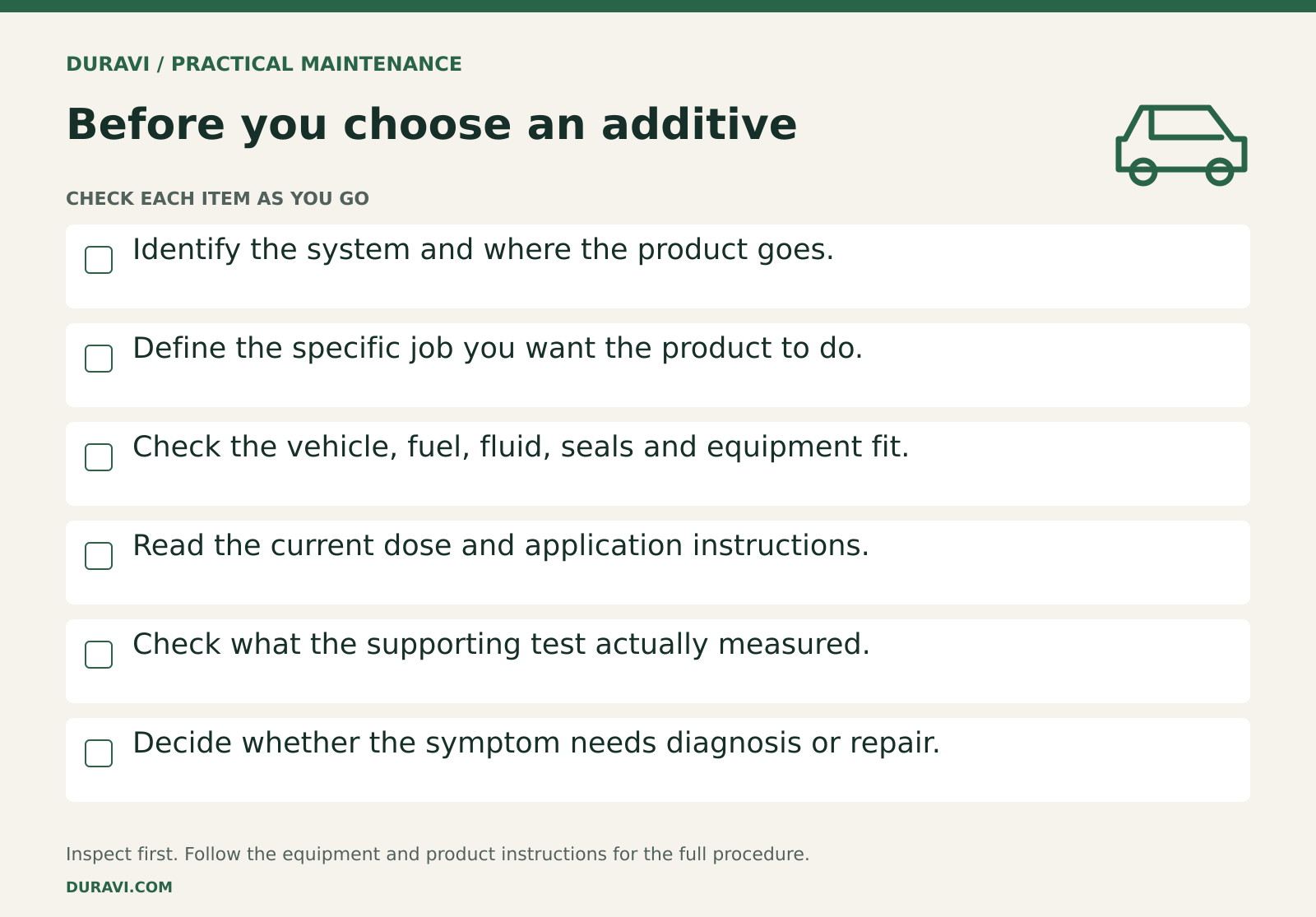
Before you choose an additive
Identify the system and where the product goes.
Define the specific job you want the product to do.
Check the vehicle, fuel, fluid, seals and equipment fit.
Read the current dose and application instructions.
Check what the supporting test actually measured.
Decide whether the symptom needs diagnosis or repair.
Where Duravi fits
Duravi Engine Enhancer brings the surface-treatment approach to the engine-oil side of this discussion. It travels through the oil to metal contact surfaces involved in friction and wear, where it is intended to support those working surfaces. That gives it a specific role to consider alongside routine maintenance. Start with the correct oil, a mechanically sound engine, and the current application instructions. Keep following your vehicle’s service schedule and address any warning signs before adding a treatment.
Your next step
Give your engine’s working surfaces some extra attention. Explore Duravi Engine Enhancer, check the application directions for your vehicle, and make it part of your next planned oil service.
Before choosing an additive, use the checklist below to decide whether it fits your vehicle, your maintenance needs, and the job you want it to do.