
The Lubricant Crisis Is Not Just an Oil Problem. It Is a Reliability Problem
Lubricant buyers are being forced into harder conversations. Base oil availability, additive constraints, pricing pressure, and substitution risk are no longer abstract supply-chain concerns. They are operational risks that eventually show up as heat, wear, vibration, grease consumption, maintenance labor, and downtime.
But the right response is not simply buying more lubricant or waiting for markets to normalize. The better question is: which assets are placing the greatest burden on the lubricant in the first place?
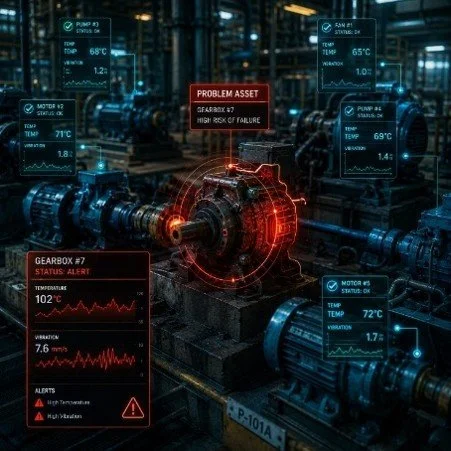
Every plant has them. A gearbox that runs hotter than it should. A bearing that consumes grease faster than expected. A hydraulic system that keeps trending above normal temperature. A line where corrosion, contamination, or washout keeps increasing maintenance demand. These assets are often treated as isolated maintenance issues, but in a constrained lubricant environment, they become supply-chain exposure points.
Duravi helps buyers reframe the problem. We do not ask teams to start with a lubricant SKU. We ask them to start with the failure mode.
Where is friction creating heat?
Where is wear shortening component life?
Where is vibration warning of future failure?
Where is corrosion accelerating lubricant consumption?
Where is downtime costing more than the product itself?
Duravi’s surface-engineering technology is designed to work with existing lubrication systems to improve the environment at the friction point. That matters because lubricant performance is only part of the equation. The condition of the metal surface, the severity of the contact point, and the operating stress placed on the system all influence how hard that lubricant has to work.
For lubrication buyers, the shift is simple: stop asking only, “What lubricant can I buy?” Start asking, “Which assets are making my operation more dependent on lubricant than it needs to be?”
The companies that win through this cycle will not be the ones that treat lubricant supply as a procurement problem alone. They will be the ones that use the moment to reduce maintenance exposure, extend asset life, and build a more resilient operating model.
Have one asset that runs hot, consumes grease, or keeps failing? Start there. Request a measured Duravi trial.